Welcome to the Cryptography and Security Group of the Institute of Information Security and Dependability
The Cryptography and Security group of the Institute of Information Security and Dependability is headed by Jörn Müller-Quade and emerged from the Institute for Cryptography and Security (IKS) and the Institute for theoretical Computer Science (ITI) through multiple restructurings. Research topics are in the areas of cryptography and IT security.
The European Institute for System Security (EISS) is affiliated to the working group, which bundles the practical implementation of cryptography in cooperation with the Research Center for Computer Science (FZI) and industrial partners.

Jörn Müller-Quade, Professor of Cryptography at KIT and spokesperson for the KASTEL Security Research Labs, considers the recently discovered PHP vulnerability to be extremely critical. In his assessment, the flaw allows attackers to gain complete control over affected web servers and execute arbitrary malicious code. Since PHP is used by a large proportion of websites worldwide, the vulnerability affects not only public institutions and universities, but also online shops and other business-critical services in particular.
On October 22, he shared his expert assessment of this highly topical and widely discussed issue in several media interviews.

On October 9, the Karlsruhe Manifesto for Digital Sovereignty was publicly presented at the Center for Art and Media (ZKM) and signed by representatives from academia, business, politics, and civil society. The declaration establishes Karlsruhe as a European hub of expertise for digital sovereignty, where Europe and Germany can strengthen their capacity for action, technological independence, and digital self-determination.
Among the signing members was Prof. Dr. Jörn Müller-Quade, spokesperson for the KASTEL Security Research Labs at the Karlsruhe Institute of Technology (KIT). As one of the leading experts in IT security and data protection, he emphasized the central importance of trustworthy digital infrastructures and secure technologies as the foundation of digital sovereignty.
The Karlsruhe Declaration sets out key guidelines for the responsible use of digital technologies. Among other things, it calls for strengthening European expertise in key technologies, promoting open and secure digital ecosystems, and consistently taking data protection and IT security into account during the digital transformation.
By signing the declaration, the participants underscore their shared commitment to shaping the digital future in an active, secure, and self-determined manner. The initiative aims to further strengthen the public discourse on digital sovereignty and provide concrete impulses for the political, academic, and business sectors.
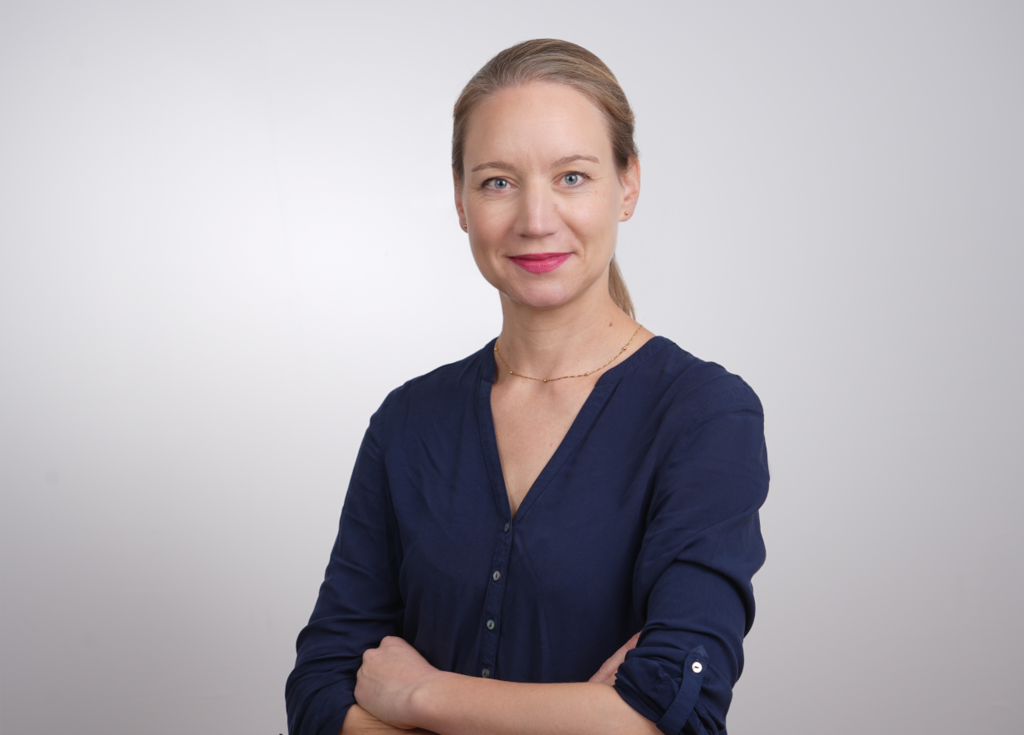
We are delighted to welcome Prof. Dr. Juliane Krämer to the KASTEL Security Research Labs. Since October 1, she has joined the research team in the Engineering Secure Systems (ESS) topic.
Prof. Dr. Krämer studied Business Mathematics at the Technical University of Berlin, where she also earned her Ph. D. in cryptography. She subsequently worked as a postdoctoral researcher and junior research group leader at the Technical University of Darmstadt before accepting a professorship in data security and cryptography at the University of Regensburg.
Her research focuses primarily on post-quantum cryptography and the physical security of cryptographic systems. She will continue to pursue these topics at KASTEL. In addition, she plans to conduct research on security awareness as well as cryptographic aspects of quantum key distribution (QKD) and quantum security.
We look forward to working with Prof. Dr. Krämer and wish her a successful start at KASTEL.
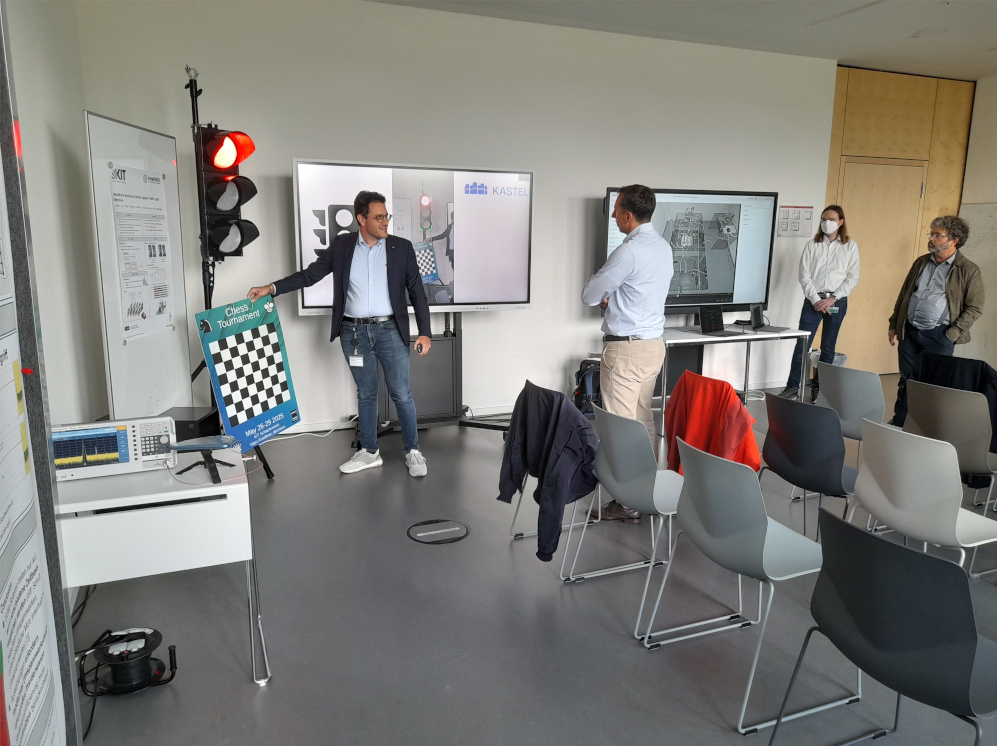
On Friday, October 2, Christian Linder, Delegate for the Helmholtz Research Area “Information” in Brussels, visited the KASTEL Security Research Labs. Several demonstrations from various application areas provided a comprehensive insight into the diverse field of IT security research.
Jeremias Mechler opened the event with a live demonstration showing how AI computations can be performed within a cryptographic enclave on the DKFZ’s Kaapana platform without providing insight into sensitive medical data.
Next, Alessandro Erba presented realistic threat scenarios for traffic light recognition in autonomous vehicles using the “Attacks on Traffic Light Recognition and Countermeasures” demonstrator.
The Energy Lab demonstrated how an attacker can manipulate electrical substations and take transformers offline by deliberately transmitting spoofed GPS signals via a directional radio antenna.
Using the “Remote Attestation in OPC UA” demonstrator, Paul Georg Wagner showed how industrial systems can be protected against tampered or untrusted devices interfering with their control systems.
Finally, Benjamin Berens presented the “NoPhish” demonstrator. It illustrates four measures developed to raise awareness and provide protection against phishing attacks.
Christian Linder was impressed by the research projects presented and their real-world relevance.
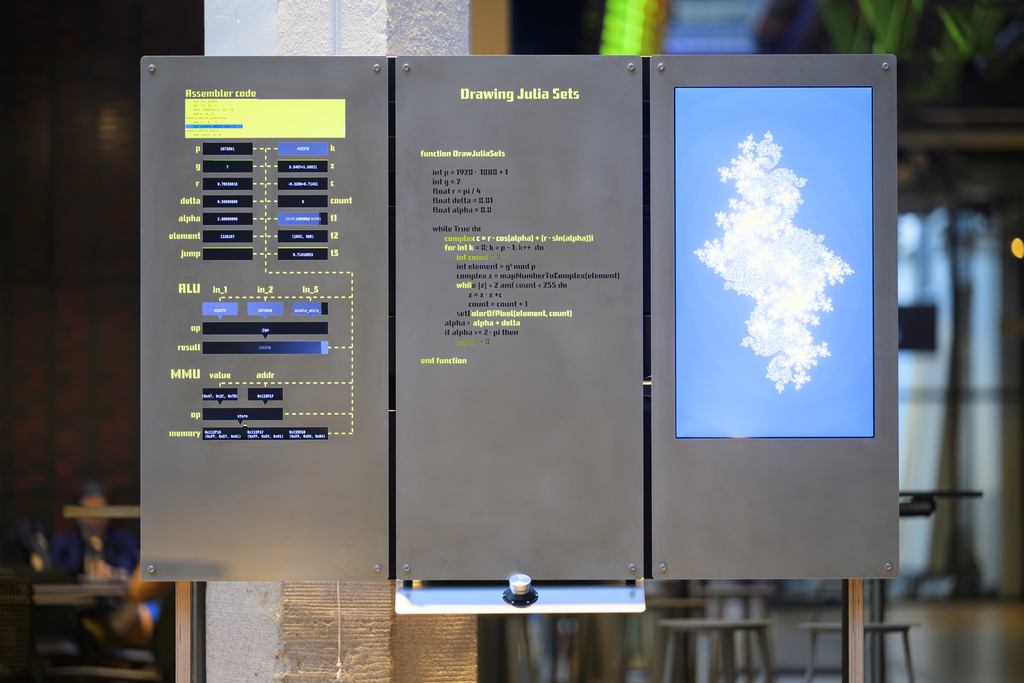
As part of the opening event of the “Art, Summer, Technology” series hosted by Dr. Isabel Gallin (Karlsruhe Institute of Technology), the interactive installation “Code Beautiful Like a Clock” was on display at the ZKM | Center for Art and Media on Friday, July 11, 2025. The piece was developed by Prof. Dr. Jörn Müller-Quade (spokesperson for the KASTEL Security Research Labs) and Dr. Jeremias Mechler (KASTEL SRL researcher).
“Code Beautiful Like a Clock” impressively demonstrates that computer programs can rival the beauty of mechanical clocks. While traditional clocks captivate with their visible precision—gears interlocking in perfect harmony—computer programs follow similarly strict rules. However, their “mechanics” remain hidden, unfolding deep within the processor at unimaginable speeds.
This installation brings that invisible world to light. Using a rotary dial, visitors can adjust the processing speed—from slow to lightning-fast—making the inner workings of computation visible to the human eye.
On the right, an aesthetic pattern emerges, visualizing the digital process. In the center, they see the corresponding part of the program highlighted. On the left, viewers see the the execution within the
processor.
On Friday evening, Dr. Jeremias Mechler guided fascinated visitors through the installation, revealing just how much artistry lies hidden within seemingly abstract code—truly, “Code Beautiful Like a Clock.”
On June 30, the federal state of Baden-Württemberg invited the laureates together with researchers to the traditional boat trip on Lake Constance at the end of the 72nd Nobel Laureate Meeting in Lindau. The final plenary session took place on the island of Mainau. The conference aims to promote the interdisciplinary dialogue between researchers. Jörn Müller-Quade and Jeremias Mechler from the KASTEL Security Research Labs at the Karlsruhe Institute of Technology presented a cryptograhic method that enables privacy-preserving computations on private data. A new feature of the method is the hardware, without having to fully trust the hardware itself. The new protocol has applications in medicine and represents a first cooperation with the recently founded KIT center HealthTech. According to Jörn Müller-Quade and Jeremias Mechler there was a very lively exchange with the participants on the boat trip. The newly developed software aroused particular interest among Science Minister Petra Olschowski.